
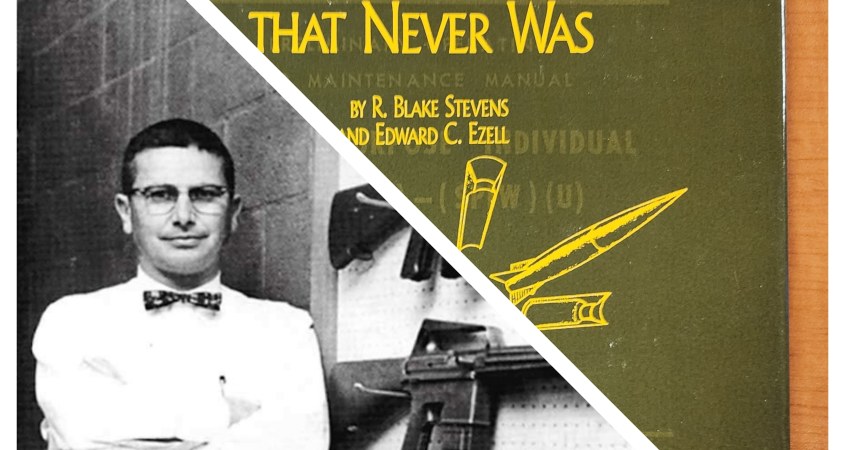
Over the coming weeks, you will see random posts talking about history leading up to the Colt AR-15. This is the first post in that series.
Eugene Stoner, the designer of the AR-15, was born in 1922. The seed of his historic firearm invention was planted in 1938 when the U.S. government established the Ballistic Research Laboratories at Aberdeen Proving Grounds.
The purpose of the BRL was to conduct ballistics research for the Army. As a result of the enormous ammunition expenditure per enemy casualty (50,000 rounds fired per) in World War II, the Hall Report, titled “An Effectiveness Study of the Infantry Rifle” was published in 1952.
The Hall Report was significant because it became the document that formed the foundation of what became known as the “Small Caliber High Velocity” (SCHV) concept. The goal of the SCHV concept was to show that bullets around .22 caliber could produce lethality similar to the .30 caliber M2 projectile in use at the time.
The Hall Report was followed by the Hitchman Report which I will touch on in my next post.
Reference:
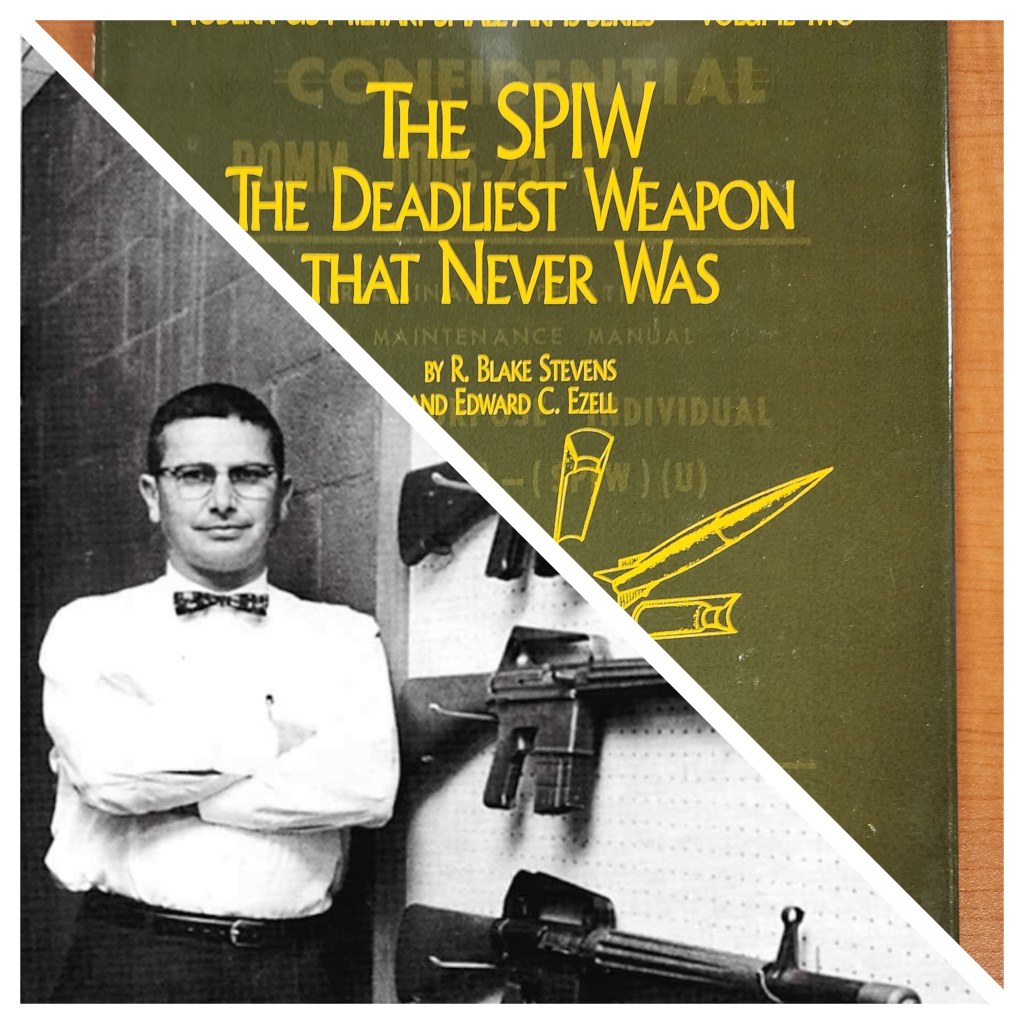
Stevens, R. B., & Ezell, E. C. (1985). The SPIW: The deadliest weapon that never was (Ser. Modern US Military Small Arms Series). Collector Grade Publications.
 The Colt AR-15 Resource
Looking forward to your new series on AR development.
Mike Echols
LikeLike
That reminds me that I need to repost and update my old SPIW article over at ScatteredShots.com. And once again, copies of the Hall and Hitchman reports can be downloaded from DTIC.mil. There is also a nice SPIW summary in one of the volumes of the “Report of the M16 Review Panel”. It is the volume dedicated to the Army Small Arms Program.
LikeLiked by 1 person
I downloaded the Hitchman Report last night. I need to find the Hall Report to download. I’m going to upload both documents here so that they are accessible to future visitors.
LikeLike
Link to Hall report citation:
https://apps.dtic.mil/sti/citations/AD0377335
You can download the full report from there.
LikeLike
I would love to see your SPIW article.
LikeLike